
Affordable Dental Payment Plans for Seniors: 2026 Guide
Table of Contents
Understanding Dental Procedure Costs and Out-of-Pocket Expenses
Dental Membership Plans for Retirees: A Budget-Friendly Alternative
Third-Party Dental Financing Options: Loans and Credit
How to Pay for Dental Implants on a Budget
Medicare, Private Insurance, and Dental Coverage for Seniors
What Original Medicare Actually Covers
Medicare Advantage and Medigap: Two Very Different Answers
The Three Real Paths, and How to Choose
A Decision Shortcut
Tax Deductibility of Dental Expenses and Negotiating Dental Bills
The Medical Expense Deduction: How It Actually Works
Timing the Deduction Across Tax Years
Negotiating the Bill: A Practical Script
Stacking the Two Strategies
Making Dental Payment Plans Work for Your Situation
Conclusion: Taking the Next Step Toward Affordable Care
Frequently Asked Questions
Last Updated: September 16, 2026
Understanding Dental Procedure Costs and Out-of-Pocket Expenses
Affordable dental payment plans for seniors start with understanding what you're charged for. Dental costs split into preventative care (cleanings, exams) and restorative procedures (crowns, bridges, dentures, implants). Most dental coverage plans cap annual maximums, leaving seniors to cover the remainder out of pocket.
Dental Membership Plans for Retirees: A Budget-Friendly Alternative
Dental membership plans for retirees work like a subscription, not insurance. You pay an annual fee and receive discounted procedure rates plus a set number of free preventative visits, no waiting period, no annual maximum, no claim forms.

Pro Tip Compare the membership plan's fee schedule against what you'd pay out of pocket for your specific procedures. If you only need cleanings, the plan is a clear win. If you need implants, run the numbers carefully.
Third-Party Dental Financing Options: Loans and Credit
Third-party dental financing options spread treatment costs over months or years through an outside lender, medical credit cards, personal loans, or in-house payment plans from the practice itself.
Financing Type | Best For | Watch Out For |
In-house payment plans | Smaller treatment costs | Short terms, limited amounts |
Medical credit cards | Mid-range procedures | Deferred interest traps |
Personal loans | Larger restorations | Credit check required |
Interest-free financing | Those who can pay quickly | Retroactive interest if late |
How to Pay for Dental Implants on a Budget
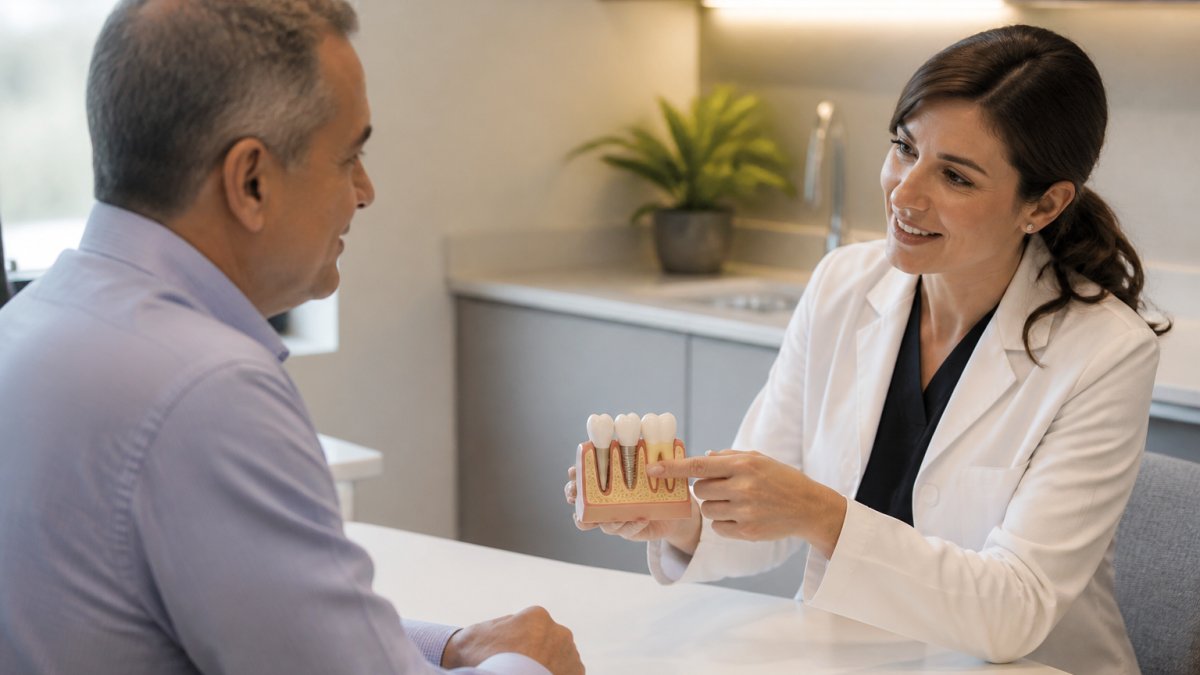
Paying for dental implants on a budget requires combining strategies. Implants are among the most expensive restorative procedures, so seniors need a layered approach: use insurance or a discount plan for diagnostics and preventative care, apply financing to the surgical portion, and negotiate the total fee before treatment begins.
Watch Out Deferred-interest financing can cost you more than a standard loan if you don't clear the balance before the promotional period ends. Interest is often charged from the original purchase date, not from the end of the promo.
Medicare, Private Insurance, and Dental Coverage for Seniors
Original Medicare does not cover routine dental care, and that fact derails more retirement budgets than any other coverage surprise. Knowing where the gap sits, and which products fill it, is the difference between paying full price and a negotiated rate.
What Original Medicare Actually Covers
Medicare Part A (hospital insurance) and Part B (medical insurance) generally exclude services "in connection with the care, treatment, filling, removal, or replacement of teeth or structures directly supporting the teeth." The narrow exception: when a dental procedure is required to treat a covered medical condition, jaw reconstruction after an accident, or a dental exam required before a covered organ transplant or certain cancer treatments.
Medicare Advantage and Medigap: Two Very Different Answers
Medicare Advantage (Part C) plans, offered by private insurers, must cover everything Original Medicare covers, but many bundle in routine dental benefits. The catch: dental benefits vary wildly by plan and county. Some include only preventive care (two cleanings and an exam yearly); others add a small annual maximum for restorative work, often low hundreds to low thousands. Never assume your Advantage plan includes dental, read the Evidence of Coverage document.
The Three Real Paths, and How to Choose
Once you accept that Original Medicare leaves a dental gap, you have three practical routes:
Private dental insurance. Standalone plans sold on or off the health insurance marketplace. Expect annual maximums (commonly $1,000-$2,000), deductibles, 6-12 month waiting periods for major work like crowns and bridges, and coinsurance rising with procedure complexity. Best for seniors expecting ongoing preventive and minor restorative care who can plan ahead of the waiting period.
Dental discount / membership plans. Not insurance. Pay an annual fee for a contracted fee schedule with discounts on every procedure, no waiting period, no annual maximum, no claim forms. Best for seniors needing major work soon, or told they need implants, dentures, or multiple crowns.
Self-pay plus financing. Pay out of pocket, negotiate the fee, and spread the cost through a third-party lender or in-house payment plan. Best for seniors with strong credit who want maximum provider choice and no plan restrictions.
A Decision Shortcut
Ask yourself three questions in order:
Do I need major work in the next 12 months? If yes, insurance waiting periods will likely leave you paying cash for the expensive procedures anyway. A discount plan or self-pay plus financing usually wins.
Is my total annual dental spending likely to stay under the plan's annual maximum? If yes, insurance can pencil out. If no, the maximum caps the insurer's exposure, not yours.
Can I afford the premium whether or not I use the plan? If the answer is no, a fee-for-service discount plan with a lower annual cost is the safer floor.
Pro Tip Request the plan's full fee schedule and a written pre-treatment estimate before you enroll. Compare the discounted fee for your specific procedures against what you would pay as a cash patient. The plan that looks cheapest on the brochure is not always the plan that saves the most on the treatment you actually need.
Seniors who qualify for Medicaid should check whether their state covers adult dental services, coverage varies significantly, with some states covering only emergency extractions and others covering dentures and preventive care. Veterans should check VA dental eligibility separately, since VA benefits are tied to service-connected conditions or a disability rating, not age.
Tax Deductibility of Dental Expenses and Negotiating Dental Bills
Two angles most guides skip: the tax deduction that can recover part of what you spend, and direct negotiation that can lower the bill before you pay it. Both are underused by seniors and entirely legal.
The Medical Expense Deduction: How It Actually Works
Dental expenses qualify as deductible medical expenses on your federal return, but the deduction is gated by a floor: you can only deduct qualifying medical and dental expenses exceeding 7.5% of adjusted gross income (AGI) (Topic no. 502, Medical and dental expenses). A senior with $50,000 AGI must spend more than $3,750 on qualifying care before any deduction begins, and only the amount above that threshold is deductible.
Qualifying dental expenses generally include:
Payments for the diagnosis, cure, mitigation, treatment, or prevention of dental disease
Dentures, bridges, crowns, and implants, including the cost to insert them
Braces and other orthodontic work, when medically necessary
Preventive care such as cleanings, exams, and X-rays
Travel costs to and from dental appointments, at the standard medical mileage rate
Timing the Deduction Across Tax Years
Because the deduction is tied to a percentage of AGI, the year you pay matters. If you're close to the threshold, accelerating a procedure into December, or deferring it into January, can push you over the line in one year instead of falling short in two. Seniors who itemize should model this with their tax preparer before scheduling major work.
Negotiating the Bill: A Practical Script
Dental practices routinely negotiate, the treatment plan fee is a starting point, not fixed. Here's a sequence that works:
Ask for the cash-pay price. Say: "I am paying out of pocket with no insurance. What is your cash-pay rate for this treatment?" Many practices discount 5-15% for immediate payment because they avoid insurance processing costs and collection risk.
Ask about a prompt-pay discount. Say: "If I pay the full balance today, is there a discount?" This is different from the cash-pay question and sometimes stacks.
Ask about a sliding scale or hardship adjustment. Say: "I am on a fixed income. Do you offer a sliding scale or a financial hardship adjustment?" Nonprofit clinics and some private practices do; the worst answer is no.
Ask about phasing treatment. Say: "Can we split this across two calendar years to reset my annual maximum?" This is especially useful for patients with insurance.
Ask about a payment plan before financing. Say: "Do you offer an in-house payment plan, and what are the terms?" In-house plans often beat third-party lenders on cost because there is no origination fee.
Watch Out Get any negotiated discount in writing on the treatment plan or a signed financial agreement before treatment begins. A verbal discount is difficult to enforce after the work is done.
Stacking the Two Strategies
A senior who negotiates a 10% cash-pay discount and deducts the unreimbursed balance above the AGI floor reduces the true cost of care twice. Neither step requires a lawyer, a credit check, or a new plan, only that you ask and keep the paperwork.
Making Dental Payment Plans Work for Your Situation
Matching the right payment method to your situation matters more than chasing the lowest advertised rate. Veterans may qualify for dental aid through VA benefits, and some disability programs include dental coverage. Seniors with special needs should ask about comprehensive care coordination.
Key Takeaway The best affordable dental payment plan is the one that matches your treatment timeline, your cash flow, and your coverage gaps. There's no universal winner.
Conclusion: Taking the Next Step Toward Affordable Care
The hardest part of affording dental work isn't finding a plan, it's knowing which fits your procedures, budget, and timeline. Start with a written treatment plan and fee schedule, then compare insurance, membership plans, and financing side by side.
Frequently Asked Questions
Do seniors get special dental payment plans?
Yes, many dental offices offer payment plans tailored to seniors on fixed incomes. These can include interest-free financing for 6-24 months, senior discounts, or membership plans with lower monthly fees. Some practices also provide a discount for new patients, such as 10% off dental work. It's best to ask your dentist directly about senior-specific options and whether they offer in-house financing or third-party lending.
How can I pay for expensive dental work if I am retired?
Retirees can combine several strategies: dental membership plans for retirees often cost less than insurance, third-party dental financing options spread costs over time, and you can use HSA or FSA funds if available. Some dentists offer in-house payment plans with no credit check. Also, check if you qualify for free or low-cost programs through dental schools or community health centers. Always ask for a written treatment plan and fee schedule before committing.
Are there interest-free dental payment plans available?
Yes, many third-party financing companies offer interest-free financing if you pay the balance within a promotional period, often 6 to 24 months. Some dental offices also provide short-term interest-free in-house plans. However, you may need good credit to qualify. If you miss a payment or exceed the promotional period, interest can be retroactive. Always read the payment terms and loan duration carefully before signing.
Does Medicare cover dental payment plans?
Original Medicare (Part A and Part B) does not cover routine dental care or dental payment plans. Medicare Advantage (Part C) may include some dental coverage, but it varies by plan and often has annual maximums. Standalone dental insurance or dental savings plans can help fill the gap. For seniors, dental membership plans for retirees are often a budget-friendly alternative to insurance, offering predictable out-of-pocket costs for preventative care and restorative procedures.
Inquiry Services Page


Comments