
How to Finance Dental Implants in The Villages
Table of Contents
Step 1: Get a Written Treatment Plan and Cost Estimate
What Your Estimate Should Itemize
Step 2: Review Your Dental Implant Financing Options
Anchor the Options to a Realistic Cost Range
Sample Monthly Payments by Balance and Term
Office Payment Plans vs. Third-Party Healthcare Lenders
Step 3: Understand Dental Implant Payment Plans Before You Sign
Step 4: Plan for Dental Implants Without Insurance
What Medicare and Dental Insurance Usually Do Not Cover
Step 5: Learn How to Compare Dental Financing Offers
The Four Numbers That Decide the Comparison
Worked Comparison: Promotional vs. Standard Financing
Questions That Expose the Fine Print
A Simple Scoring Method
Step 6: Apply for Financing and Prepare for Approval
Step 7: Cover the Gap With HSA, FSA, Savings, or Cash
Common Mistakes to Avoid When Financing Implants
Frequently Asked Questions
Last Updated: October 19, 2026
Step 1: Get a Written Treatment Plan and Cost Estimate
You cannot finance what you have not priced. That is the first rule of how to finance dental implants in The Villages, and the step most patients skip when they finance dental implants. At Royal Dental at The Villages, we tell every patient: get the full treatment plan in writing before anyone runs a credit check.
A treatment plan lists every procedure you need, the order, and the cost of each part, your only reliable way to compare financing offers later.
What Your Estimate Should Itemize
Ask for a line-by-line breakdown, not a single lump sum. A complete estimate should separate:
Imaging and diagnostics
Extractions, if needed
Bone grafting, if needed
Itemization matters because financing terms apply to the total. If the office bundles everything into one number, you cannot tell which charges are fixed and which might change. Ask what happens if a graft is added mid-treatment.

Pro Tip Ask for the estimate in writing and take it home before you commit. A plan you can read without a salesperson in the room is one you can actually compare against financing offers.
Step 2: Review Your Dental Implant Financing Options
Most patients have three paths: pay in full, use an in-office payment plan, or apply with a third-party healthcare lender. Each trades cost against convenience differently. Few financing pages tie those options to an actual implant price, so start there.
Dental implant financing options generally fall into these buckets:
Cash or card at time of service - simplest, no interest, but requires the full amount up front
Office payment plans - arranged directly with the practice, terms set by the practice
Third-party healthcare loans - arranged through a financing provider, terms set by the lender
Anchor the Options to a Realistic Cost Range
Before comparing terms, you need a working number. Implant pricing varies by case, but the components are consistent:
Single implant with crown: commonly quoted in the low-to-mid four figures per tooth, depending on grafting and the restoration material
Multiple adjacent implants: the per-tooth cost usually drops because imaging, sedation, and follow-up visits are shared
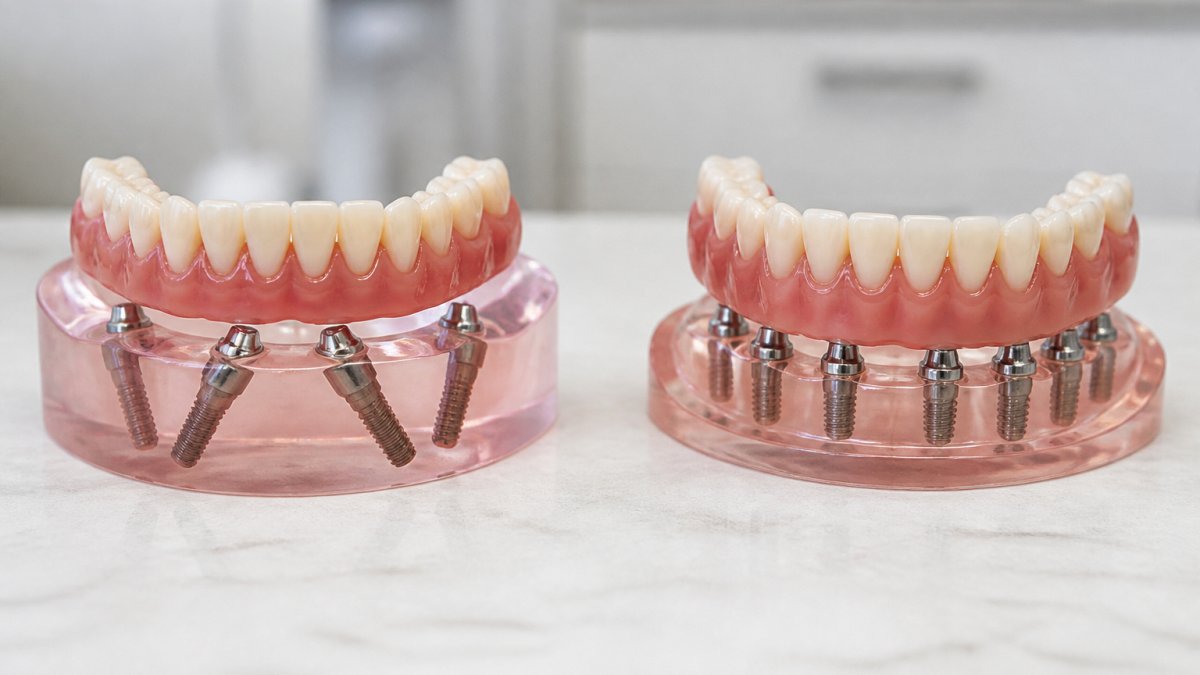
Full-arch or full-mouth restoration: typically the highest-cost category, often five figures or more per arch, because it combines multiple posts, abutments, and a full prosthesis
Treat any range as an estimate until your own treatment plan itemizes it. The point is to know which financing bucket you are shopping in.
Sample Monthly Payments by Balance and Term
The math below uses a standard amortizing loan, the structure most third-party healthcare lenders use. It is illustrative only; your APR and term come from the lender.
Balance financed | 24 months at 0% APR | 24 months at 14.90% APR | 48 months at 14.90% APR |
$3,000 | $125/mo | about $145/mo | about $83/mo |
$6,000 | $250/mo | about $291/mo | about $167/mo |
$15,000 | $625/mo | about $727/mo | about $417/mo |
$30,000 | $1,250/mo | about $1,454/mo | about $833/mo |
Two things jump out. A true 0% promotional plan is far cheaper than a standard loan at the same term. And stretching the term lowers the monthly figure but raises total repayment: on $15,000, 24 months at 14.90% costs roughly $2,450 in interest; 48 months costs roughly $5,000.
Office Payment Plans vs. Third-Party Healthcare Lenders
An office payment plan lets you pay the balance over time directly to the practice.
A third-party healthcare lender is a separate finance company that pays the practice up front and collects from you. Approval, interest rate, and loan term all come from the lender, not the office.
Feature | Office Payment Plan | Third-Party Lender |
Who sets terms | The dental practice | The lender |
Credit check | Often none or soft | Usually a hard check |
Interest | Sometimes none | Varies by loan |
Approval speed | Same visit | Minutes to days |
Best for | Smaller balances, short timelines | Larger full-mouth cases |
Ask both sides the same questions. You will get very different answers.
Pro Tip Bring your written estimate to the financing conversation and ask each option to quote against the same total. Comparing a $6,000 office plan to a $15,000 lender approval tells you nothing.
Step 3: Understand Dental Implant Payment Plans Before You Sign
A dental implant payment plan is only as good as its fine print. The headline "as low as $X per month" tells you almost nothing.
Read for these five terms:
APR - the annual percentage rate. This is the real cost of borrowing.
Loan term - how many months you will pay.
Deferred interest - if the rate is 0% for a promotional period, what happens when that period ends?
Down payment - how much is due at signing.
Total repayment - the full amount you will hand over, not the monthly figure.
Watch Out Deferred-interest promotional financing is the most common trap. If you do not pay the full balance before the promotional period ends, some lenders retroactively charge interest from day one (How to understand special promotional financing offers on credit cards). Ask directly: "Is this true 0% financing, or deferred interest?"
Multiply the monthly payment by the number of months. Compare that total to the cash price. That gap is your true financing cost.
Step 4: Plan for Dental Implants Without Insurance
Most patients assume dental insurance will cover implants. Usually it will not, or only a fraction. Dental implants without insurance is the reality for many in this age group, so plan around it from the start.
What Medicare and Dental Insurance Usually Do Not Cover
Original Medicare generally does not cover routine dental care or dental implants (Dental service coverage). Some Medicare Advantage plans include limited dental benefits, but coverage varies widely. Check your specific plan documents rather than assuming.
Private dental insurance often treats implants as a major service, with waiting periods and annual maximums that fall well short of a full-mouth case. The official Medicare dental coverage guidance is the place to confirm what your plan actually pays.
Key Takeaway Before you finance, run a benefits verification with your insurer. Knowing your annual maximum and any waiting period tells you the real out-of-pocket gap, which is the number you actually need to finance.
Step 5: Learn How to Compare Dental Financing Offers
Comparing offers is a skill most patients never learn. The trap is comparing monthly payments: two offers can show the same $250 per month and differ by thousands in total cost. Compare total repayment first, then work backward to the monthly figure.
The Four Numbers That Decide the Comparison
Every offer reduces to four numbers. Write them down side by side before you judge anything:
Amount financed - the balance after your down payment, not the full treatment price
APR - the annual percentage rate, which is the only apples-to-apples cost-of-borrowing figure
Term - the number of months you will pay
Total repayment - monthly payment multiplied by term, plus any fees
The gap between total repayment and the amount financed is your true financing cost. If an offer will not state the APR in writing, treat that as a no.
Worked Comparison: Promotional vs. Standard Financing
Suppose your estimate comes to $12,000 and you can put $2,000 down, leaving $10,000 to finance.
True 0% promotional plan, 18 months: $556 per month, $10,000 total repayment, $0 financing cost - but only if you clear the balance before the promotional period ends.
Deferred-interest plan, 18 months: same $556 per month, but if any balance remains at the deadline, interest may be applied retroactively from the purchase date. A single missed payment can convert a free loan into an expensive one.
Standard loan at 13.90% APR, 36 months: roughly $341 per month, about $12,270 total repayment, roughly $2,270 in financing cost.
The promotional plan is cheapest only if you can retire the balance in 18 months. If $556 per month strains your budget, the longer standard loan costs more but is safer. That trade-off is the decision.
Questions That Expose the Fine Print
Ask every lender and every practice these before signing:
What is the exact APR, and is it fixed or variable?
Is this simple interest or deferred interest?
What is the promotional period, and what APR applies after it ends?
A Simple Scoring Method
Score each offer from 1 to 5 on these criteria, then add the scores:
APR is clearly stated and reasonable
No deferred-interest surprises
Loan term fits your budget without strain
The offer with the highest total score wins. If two offers tie, pick the shorter loan term. Less time in debt beats a slightly lower monthly payment.
Key Takeaway Keep a one-page comparison sheet with the four numbers and the seven questions for every offer you receive. The offer that survives that sheet in writing is the one worth signing.
Step 6: Apply for Financing and Prepare for Approval
The loan application is quick. Approval is where preparation pays off.
Most healthcare lenders run a credit check, which can temporarily affect your score, so do not apply to five lenders in one afternoon. Pick your top two.
Before you apply, gather:
Government-issued photo ID
Proof of income or retirement income
Social Security number
If you are declined, ask why. Common reasons include a thin credit file, a recent late payment, or a high debt-to-income ratio. A decline is not the end of the road. Options include:
Applying with a co-signer
Asking the practice about an in-office plan instead
Saving for a larger down payment and reapplying later
Step 7: Cover the Gap With HSA, FSA, Savings, or Cash
Financing does not have to cover the whole bill. Many patients pay part in cash and finance the rest, lowering the loan amount and total interest.
Check these sources before you borrow:
HSA - health savings account funds can often be used for qualified dental expenses
FSA - flexible spending account dollars, if you have one through an employer
Savings - money already set aside
Ask the practice whether a cash payment discount applies. At Royal Dental at The Villages, new patients receive a 10% discount on dental work and implants, which can meaningfully reduce the amount you need to finance.
Common Mistakes to Avoid When Financing Implants
These mistakes cost patients real money:
Financing before you have a written estimate. You cannot compare offers against an unknown total.
Fixating on the monthly payment. A low payment over a long term can cost far more overall.
Missing the deferred-interest deadline. Pay the balance before the promotional period ends, or interest may be charged retroactively.
Pro Tip Ask the practice one final question before you sign anything: "If my treatment plan changes, how does that affect my financing?" A practice that can answer that clearly is a practice that has done this many times.
Financing a full-mouth restoration or same-day implants takes planning, and the paperwork can feel overwhelming. At Royal Dental at The Villages, our team walks you through the treatment plan, itemized estimate, and payment options in one visit, backed by more than 30 years of experience and same-day implant care. We also offer I.V. sedation for anxious patients. Get started with Royal Dental at The Villages and build a payment plan that fits your budget and your smile.
Frequently Asked Questions
Can you get dental implants with no dental insurance?
Yes. Most implant patients pay through a mix of options rather than insurance. You can ask the dental office about an in-house payment plan, apply for a third-party healthcare loan, use HSA or FSA funds if you have them, or pay in cash. Because traditional dental insurance often caps annual benefits and treats implants as a major service, many patients plan on covering most of the treatment cost out of pocket. Get a written estimate first so you know the real number before choosing how to finance dental implants.
Does dental insurance cover dental implants?
Sometimes, but usually partially. Many dental plans classify implants as major work and reimburse a percentage after a deductible, and some exclude implants entirely while covering dentures or extractions. Annual maximums commonly cap what a plan pays in a year, which can be far below a full-mouth restoration. Ask for a benefits verification before treatment so you know what is covered, what is excluded, and what your out-of-pocket costs will be.
Can you make monthly payments for dental implants?
Yes. Two common routes are an in-office payment plan arranged directly with the dental practice and a third-party healthcare loan from a financing provider. Office plans may require a down payment and set a fixed monthly payment over a short term. Third-party loans can offer longer terms and promotional zero-interest periods, but check the APR and what happens when a promotional period ends. Ask for the total repayment amount, not just the monthly figure.
What should I ask a dentist before agreeing to a dental implant payment plan?
Ask for the full treatment cost in writing, including imaging, extractions, bone grafting, the implant itself, the restoration, and any follow-up visits. Then ask whether the plan is in-house or through a lender, the required down payment, the loan term, the interest rate or APR, and the total you will repay. Confirm what happens if treatment is delayed, whether there are prepayment penalties, and whether a new-patient discount applies to the plan.
Inquiry Services Page


Comments