
Dental Implant Infection Signs: What to Watch For
Quick Summary
A dental implant infection is inflammation of the gum and bone tissue around an implant, often called peri-implantitis. Watch for persistent or growing swelling, redness, tenderness, bleeding when brushing, pus, or lingering bad taste and bad breath. Contact your dentist if these appear rather than waiting for them to go away.
Swelling that persists or grows after the first week is an early warning sign.
Pus, a foul odor, or constant bad taste calls for a prompt dentist visit.
A loose or shifting implant needs same-day contact with your dentist.
Fever with facial or neck swelling or trouble breathing requires urgent care right away.
Do not press or wiggle a loose implant to test how much it moves.
Table of Contents
Early Dental Implant Infection: The First Warning Signs
Last Updated: November 6, 2026

Knowing the signs of dental implant infection to watch for can help you act early, before a small problem becomes a serious one. Dental implant infection is an inflammation of the gum and bone tissue around an implant, often called peri-implantitis (Peri-implantitis Update: Risk Indicators, Diagnosis, and Treatment). Patients should know what to look for after treatment.
Early symptoms are often mild. Some soreness is normal in the first few days after surgery, and it should fade over time. Trouble usually starts when discomfort gets worse, lasts longer, or shows up in new ways.
Watch for these early signs:
Swelling that persists or grows after the first week
Redness in the gums around the implant
Tenderness when you touch the area
Bleeding during brushing or flossing
A bad taste or lingering bad breath
Pain may not always be present. Infection can develop without much discomfort, so changes in the gums matter just as much as pain. If you notice any of these signs, contact your dentist rather than waiting to see if they go away. You can find top rated dental implants and book a visit with a local provider.
!Senior patient in a dental treatment chair touching the jaw while a dentist in a white coat looks on, bright calm clinic
Redness, Swelling, and Tenderness Around the Implant
Redness and swelling are the most common visible signs of trouble. Healthy gum tissue around an implant is usually pink and firm. Infected tissue often looks darker red and feels puffy.
Tenderness is another key clue. Mild sensitivity right after surgery is expected. But tenderness that keeps getting worse, or that appears weeks or months later, deserves a dental check.
Note where the redness or swelling is, and whether it spreads
Check if the area feels hot or looks shiny
Watch whether swelling goes down or stays the same over several days
Keep a simple daily note of how the area looks and feels. This makes it easier to explain changes to your dentist.
Bleeding, Pus, Bad Taste, and Persistent Bad Breath
Bleeding around an implant is not always a sign of infection. Gums can bleed a little if you brush too hard. However, bleeding that happens often, or without any clear cause, can point to inflammation.
Pus or other discharge near the implant is a more serious warning sign. A bad taste in the mouth or bad breath that does not go away with normal brushing can also signal bacteria building up around the implant.
If you notice pus, a foul odor, or a constant bad taste, call your dentist soon. Do not try to drain or squeeze the area yourself.
Pain When Chewing and a Loose or Shifting Implant
Pain and implant mobility are the two symptoms that most often separate a manageable problem from one that needs same-day attention. Understanding why each happens helps you judge how urgently to act.
Pain when chewing. Some tenderness while the implant site heals is expected, especially in the first week or two after surgery. What matters is the direction of change. A common pattern is soreness that steadily decreases; concern rises when biting pain stays the same, returns after it had faded, or appears weeks or months after surgery when the site had felt fine. Do not keep chewing through it to "test" whether it improves.
A loose or shifting implant. A healthy, integrated implant should feel solid and should not move when you press on it or wiggle the crown. Any movement is a serious warning sign. Looseness can reflect loss of the bone that holds the implant, loosening of the abutment screw or crown rather than the implant itself, or, in the early healing phase, failure of the implant to integrate. Only a dentist can tell which is happening, and the difference changes the treatment entirely. If the implant moves, feels different in your bite, or seems to be sinking or shifting, contact your dentist the same day.
Fever and spreading symptoms. Pain or looseness accompanied by fever, facial swelling, swelling under the jaw or in the neck, a feeling of pressure in the sinus area, or difficulty swallowing or breathing moves the situation out of the "call the dentist" category. These are signs of a spreading infection. Seek urgent or emergency care right away rather than waiting for an office appointment.
A practical way to sort urgency:
Contact your dentist promptly (within a day or two): worsening pain on biting, new tenderness after the site had settled, or a bite that feels off.
Contact your dentist the same day: a loose or shifting implant, visible pus, or swelling that is growing rather than shrinking.
Seek urgent or emergency care now: fever with facial or neck swelling, trouble swallowing, trouble breathing, or rapidly spreading redness.
Watch out: do not press, wiggle, or apply pressure to a loose implant to see how much it moves. To learn when pain calls for an emergency room visit, read when to go to the emergency room for tooth pain. You can worsen the situation and make the dentist's assessment harder.
Keeping a short daily note of pain level, whether it improves or worsens with chewing, and any change in how solid the implant feels gives your dentist a clearer picture than memory alone.
How Dentists Diagnose Infection: Exams and X-Rays
Here is what the evaluation typically involves.
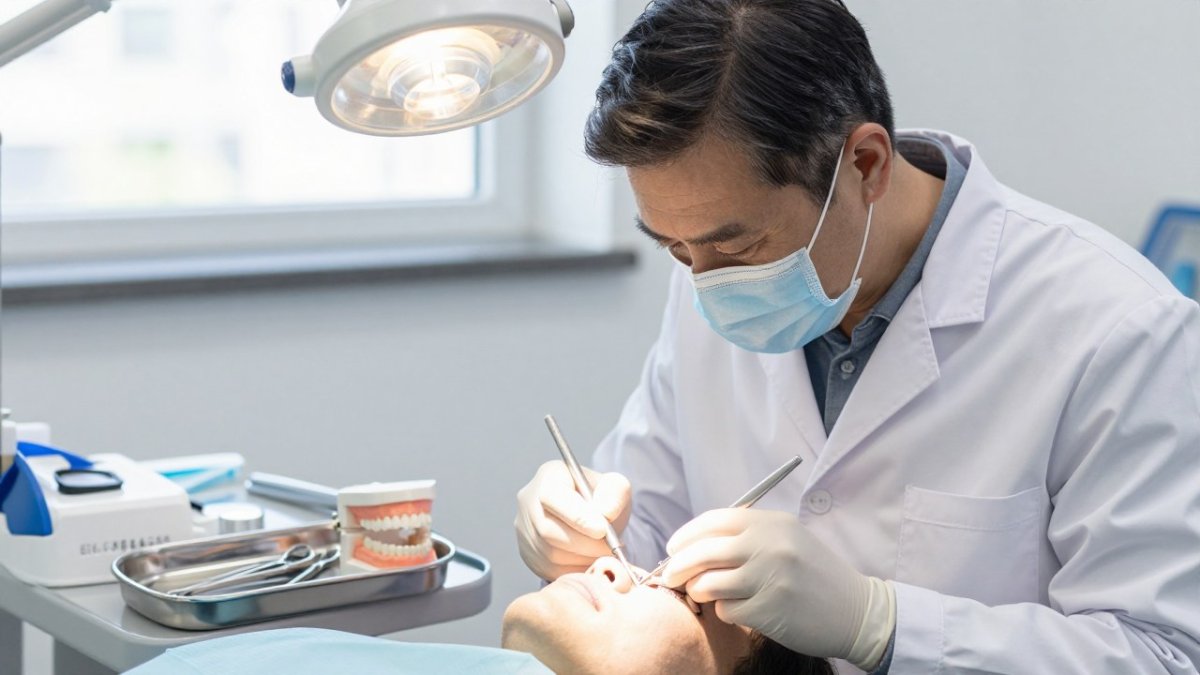
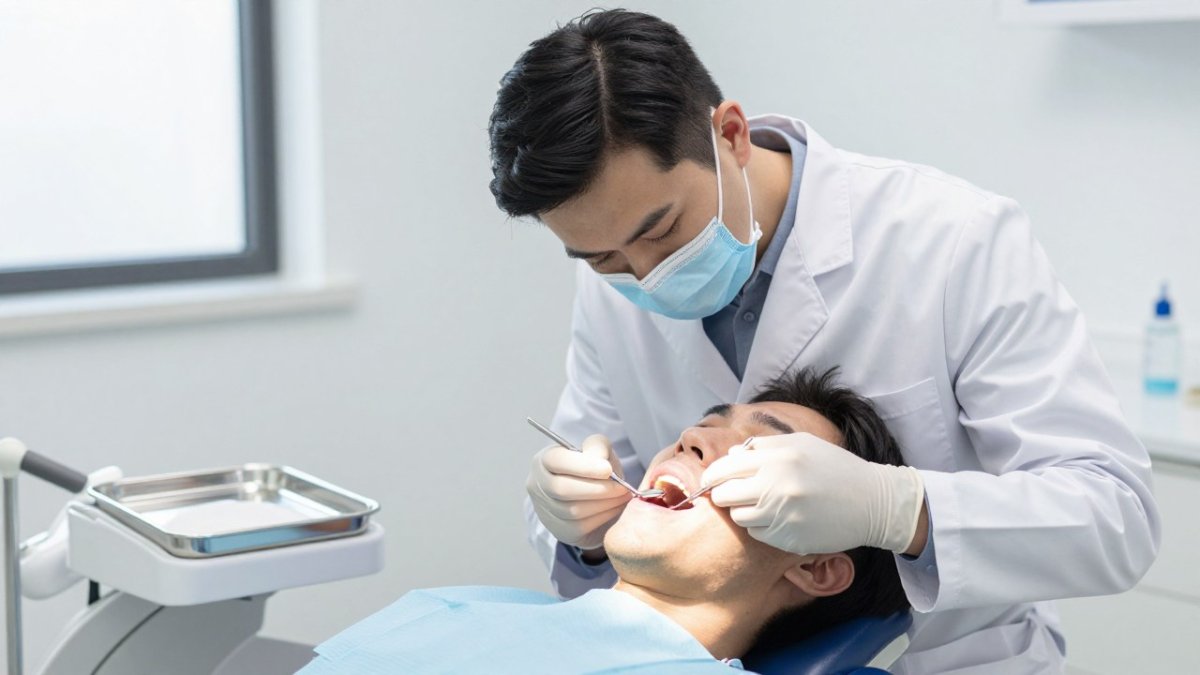
Visual and tactile exam. Your dentist inspects the gum color, contour, and firmness around the implant and compares it with the surrounding tissue. They check for swelling, discharge, and any change in the gum margin.
Probing. A periodontal probe is gently placed into the sulcus, the shallow groove between the gum and the implant, to measure depth and check for bleeding on probing. Increasing pocket depth and bleeding are common signals of inflammation around an implant. Probing around implants is done carefully because the attachment differs from that around natural teeth.
Mobility check. Your dentist tests whether the implant or the restoration moves. As noted above, any movement is significant and points toward a different set of causes than inflammation alone.
Imaging. Periapical X-rays and, when more detail is needed, cone-beam computed tomography (CBCT) show bone levels around the implant and help identify bone loss, defects, or problems with the surrounding structures. Comparing current images with earlier ones is often more informative than a single set, which is why your dentist may ask for prior records. To see how imaging and planning fit into the full implant process, read the dental implant procedure explained.
Mucositis versus peri-implantitis. These are the two conditions the exam is largely trying to separate. Peri-implant mucositis is inflammation confined to the soft tissue around the implant, with redness, bleeding, and swelling but no loss of supporting bone (Peri-implant mucositis and peri-implantitis: key features and differences). Peri-implantitis involves inflammation plus progressive loss of the bone that supports the implant (Peri-implantitis Update: Risk Indicators, Diagnosis, and Treatment). That is why bone-level imaging and probing measurements, not symptoms alone, help guide the evaluation.
Putting it together. Your dentist combines the exam findings, probing measurements, imaging, and your symptom history. No single test confirms infection on its own, and some findings overlap with other implant complications, so the full picture guides the decision.
Watch out: do not assume a normal-looking X-ray rules out a problem. Early soft-tissue inflammation can be present before bone changes are visible, which is why the clinical exam and probing matter alongside imaging.
If you are unsure whether your symptoms warrant a visit, ask your dentist's office what they recommend; describing your specific signs and timeline helps them triage you appropriately.
Dental Implant Infection Treatment and Safe Steps While You Wait
Treatment depends on how advanced the infection is, and your dentist will recommend the appropriate approach after an exam.
While you wait for an appointment, you can take a few safe steps:
Brush gently with a soft toothbrush
Floss carefully around the implant area
Rinse with warm salt water if your dentist approves
Avoid chewing hard foods on the affected side
Take pain relief only as directed by your dentist or pharmacist
Do not delay care while waiting. You can book an implant exam and CT scan to get the area properly assessed. Contact your dentist promptly if symptoms are getting worse. Seek emergency care right away if you have high fever, swelling spreading to your face or neck, trouble swallowing, or trouble breathing.
Common questions include whether an infection can be treated at home. Home care alone is usually not enough to treat an implant infection. For practical tips on resting comfortably while you wait, see how to sleep comfortably after dental surgery. Professional treatment is the safest path.
Can an infection be seen on an X-ray? Yes, X-rays can show bone loss around an implant that may suggest infection.
While you wait for an appointment, these are the safe steps the article recommends, along with the timing for seeking care.
Step | What to do | When to act |
Daily cleaning | Brush gently with a soft toothbrush | Every day |
Flossing | Floss carefully around the implant area | Daily, gently |
Rinsing | Warm salt water, if your dentist approves | As directed |
Chewing | Avoid hard foods on the affected side | Until evaluated |
Pain relief | Take only as directed by dentist or pharmacist | As directed |
Worsening symptoms | Contact your dentist promptly | Without delay |
Emergency signs | Seek emergency care right away | High fever, face or neck swelling, trouble swallowing or breathing |
Booking Your Next Visit at Royal Dental at The Villages
If you have any of these signs, do not wait to get checked. Royal Dental at The Villages offers comprehensive dental services, and a prompt exam can help protect your implant. Our team is here to answer your questions.
To book an evaluation, visit our website or call our office to arrange a consultation.
Frequently Asked Questions
How would I know if my dental implant is infected?
Watch for persistent swelling, redness, tenderness around the implant, bleeding during brushing or flossing, pus or discharge, a bad taste, or a foul odor that doesn't go away. Pain is not always present, so an infection can develop without discomfort. Some soreness in the first few days after surgery is normal, but pain that worsens or lasts is a reason to call your dentist. Schedule an exam promptly if you notice any of these signs.
Can a dental implant infection go away on its own?
A dental implant infection is unlikely to resolve on its own. Bacteria around the implant can spread into the surrounding bone and gum tissue, which may lead to bone loss and eventually loosen the implant. Early evaluation gives your dentist the best chance to control the infection and protect the implant. Do not wait to see whether symptoms improve before getting an exam.
What should I do if I think my dental implant is infected?
Contact your dentist as soon as possible and describe your symptoms, including when they started. Keep brushing gently around the area and rinse with warm salt water, but avoid aggressive probing or forcing anything into the site. Do not take antibiotics on your own without guidance. If you have a fever, facial swelling, or difficulty swallowing or breathing, seek urgent care immediately.
How is a dental implant infection treated?
Treatment depends on how advanced the infection is. Your dentist will examine the implant and may take X-rays to choose the right approach for your situation.

Comments